All articlesBusiness Technology Services
The Cost of Downtime for Small Businesses
A practical guide to the true cost of downtime and how Ternion Technology can help prevent it.

Daniel Wright27 Jul 2026
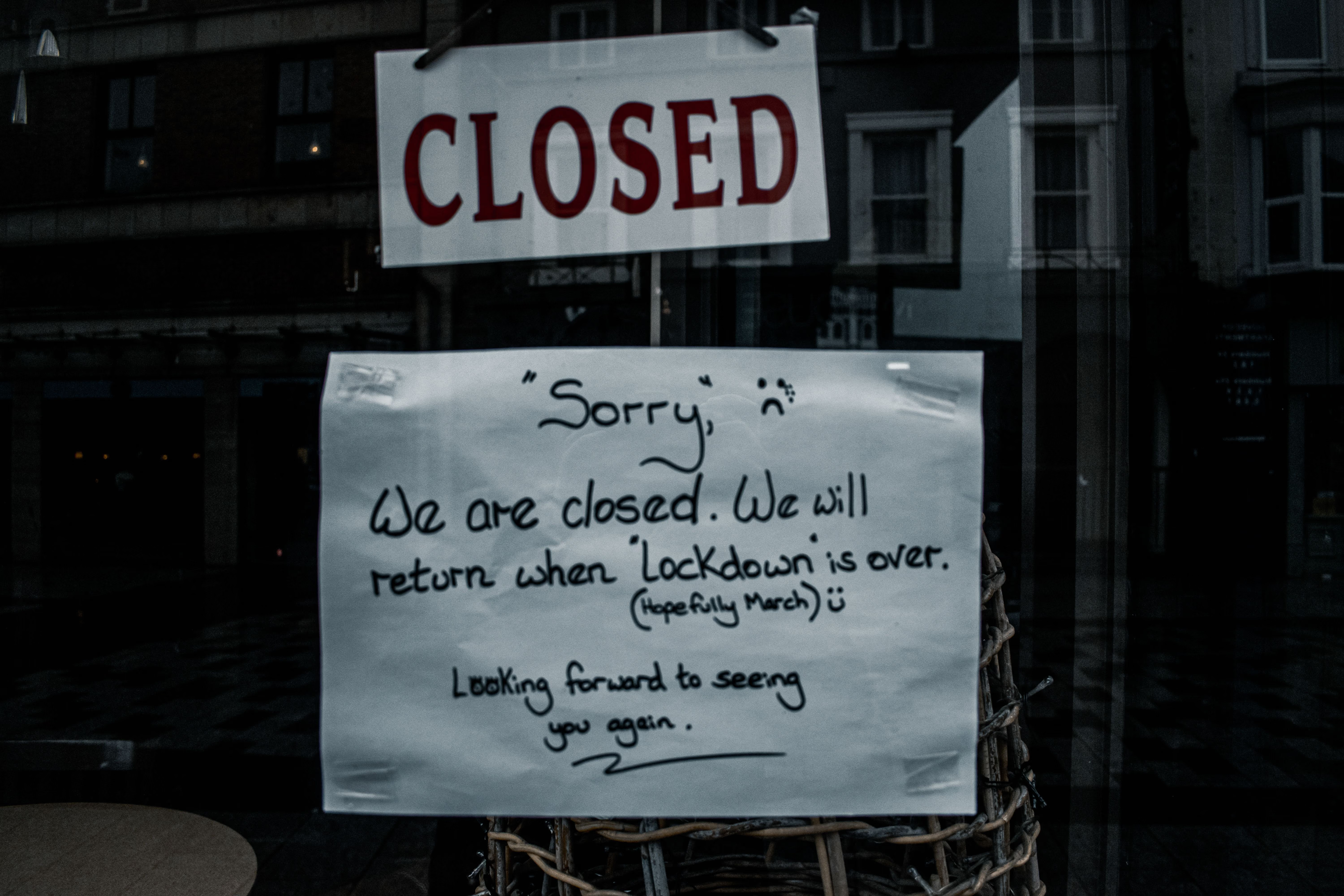
Downtime is one of those problems that often looks small from the outside. However, with the potential to become very expensive, very quickly, it is vital that plans are in place to get you back things moving and back on track again. For a small business, the real cost is rarely limited to one lost sale or a short interruption. It can affect so many facets, even some that are not always apparent. That is why downtime should be treated as a business risk, not just an IT issue.
The financial impact can also look different depending on the type of business. A company that relies on online sales, fast-moving enquiries or service delivery may lose money every minute systems are unavailable. Others may not lose revenue instantly though the interruption alone can cause a ripple effect that manifests in the aftermath of an outage. In practical terms, even a few hours offline can create a much bigger bill than most owners expect.
As we operate in the UK and New Zealand, I wanted to use both of the currencies us and our valuable customers trade with. If your business loses about GBP£1,000 / NZD$2,100 in revenue per hour, a four-hour outage, rightly, could cost around GBP£4,000 / NZD$8,400 before you even factor in recovery time. Some issues are outside of our control, should Visa or Mastercard go down, card payment services generally on a global scale have halted. Should something like a pandemic happen (feel like we've been here not too long ago...), this has a major impact in a way too. Others on the other hand are totally in our control such as the systems we design and the measures we put in place. Good backups, alternate systems, regular check ins, even rehearsals in the event things go down can all help.
One of the most serious scenarios is a cyber incident that locks staff out of key systems and also drains a bank account. Imagine a business where someone clicks a phishing link, access credentials are stolen and an attacker gets into email, banking or cloud admin tools. Suddenly, the team cannot sign in, payments may be interrupted and money can be transferred before the issue is detected. In a case like this, the cost is not just the stolen funds; it also includes emergency recovery, service disruption, potential fraud investigation and the time spent rebuilding trust with clients and suppliers. Events like these could put a business under. Though we work primarily with small business owners and operators, it's absolutely worth noting at what a giant, global organisation hit looks like... Jaguar Landrover got hit by a cyber attack in August 2025, it was valued at just shy of £2 billion pounds of lost revenue. That ripple I mentioned, it's cited that around 5,000 organisations that fed their supply chain also got hit by this in the form of lost sales and cancelled orders.
Another, that server running in the cupboard or store room at the back of your building, if you have everything running on there and never considered how your day would look should it bite the dust, what happens next? How much time do you think it would take to bring your operation back if you haven't considered having it run somewhere else for continuities sake? Even if the hardware can be replaced, the missing data may take hours or days to reconstruct and some of it may be lost permanently. That kind of incident can turn a technical fault into a major operational setback, especially if the business depends on the server for daily work.
There are also hidden costs that many owners forget to include. Staff may be paid to sit around twiddling their thumbs while systems are down, managers may spend hours handling the incident and external support, be it our own or drafting in more resource could produce some rather sizeable invoices that were never budgeted for.
The good news is that many downtime events can be reduced or avoided with the right preparation. Regular backups, tested recovery processes, endpoint protection, MFA, proactive monitoring and remediation, defined prescribed preventative maintenance and a clear support plan all help lower the risk. Just as importantly, businesses should know how quickly they need to recover and what systems matter most first. That way, if an outage does happen, the response is faster and the damage is smaller.
Our goal is not just to fix problems after they happen. It is to help businesses stay available, protected and ready to recover when something goes wrong. We have internal practices designed with protection in mind, clear continuity plans should something fail and external partners ready to help
Because when downtime starts, every minute matters.
Ref. https://www.infosecurity-magazine.com/news/jlr-hack-uk-costliest-ever-19bn/